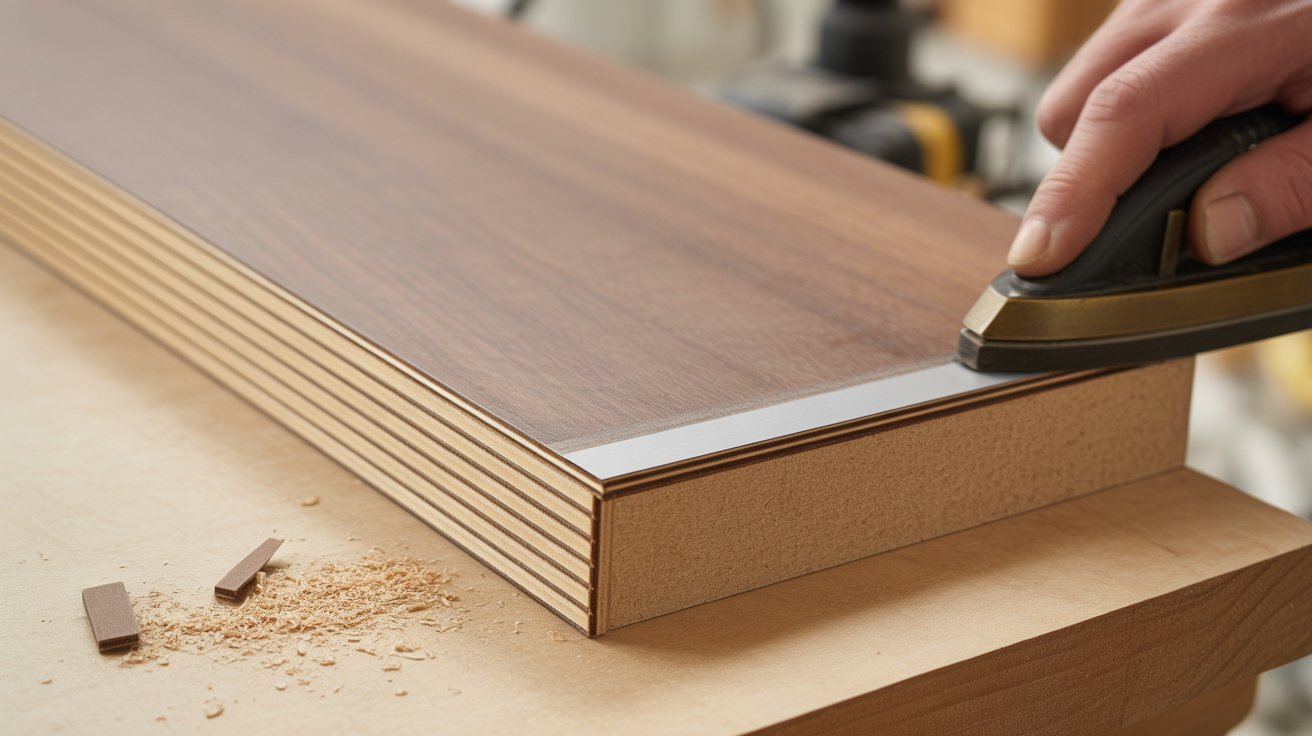
How to Choose the Right Bidding / Edge Banding for Furniture Finishing
In modern furniture manufacturing and interior projects, bidding (edge banding) plays a critical role in both aesthetics and durability. While boards such as plywood, MDF, and particle board form the core structure of furniture, it is ultimately the edge banding that gives the final product a clean, premium, and well-finished look. As a result, proper edge banding significantly enhances both visual appeal and functional performance.
At RIMS Seiko, edge banding solutions are specifically designed to meet the evolving needs of modular furniture manufacturers, interior contractors, and professional workshops. Therefore, this guide will help you understand not only what edge banding is, but also why it matters and how to choose the right bidding for durable, long-lasting furniture finishing.
What Is Bidding / Edge Banding?
Edge banding, commonly referred to as bidding in the furniture hardware industry, is a thin strip of material applied to the exposed edges of furniture panels such as MDF, plywood, or particle boards.
Key Purpose of Edge Banding:
- Covers raw board edges
- Enhances visual appeal
- Protects against moisture and damage
- Improves furniture lifespan
- Provides a seamless, factory-finished look
Without proper bidding, furniture edges remain vulnerable to chipping, water absorption, and wear, reducing both durability and perceived quality.
Why Edge Banding Is Essential in Furniture Finishing
Edge banding is not just a decorative addition, it is a functional furniture fitting that directly impacts performance.
1. Improved Aesthetics: Edge banding gives furniture a smooth and uniform appearance, matching panels perfectly and enhancing overall design appeal.
2. Protection from Moisture & Heat: Raw board edges easily absorb moisture, leading to swelling and damage. High-quality bidding acts as a protective seal.
3. Increased Durability: Edge banding protects corners from impact, scratches, and daily wear, especially in high-traffic environments.
4. Safety & Comfort: Smooth edges prevent sharp corners, making furniture safer to use in homes, offices, and commercial spaces.
Types of Edge Banding Materials
Choosing the right edge banding starts with understanding available material options. Each type suits different applications and budgets.
1. PVC Edge Banding
PVC edge banding is the most widely used option in furniture manufacturing.
Key Features:
- Flexible and durable
- Moisture and heat resistant
- Available in multiple colors, textures, and finishes
- Cost-effective and easy to apply
Best for: Modular furniture, kitchens, wardrobes, office furniture
2. ABS Edge Banding
ABS edge banding is a premium and eco-friendly alternative to PVC.
Key Features:
- High impact resistance
- Better heat tolerance
- Non-toxic and recyclable
- Excellent color stability
Best for: High-end furniture, export-quality products, premium interiors
3. Acrylic Edge Banding
Acrylic bidding offers a luxury, glass-like finish.
Key Features:
- High-gloss appearance
- Scratch-resistant surface
- Seamless edge-to-panel finish
Best for: Designer kitchens, luxury wardrobes, modern furniture
4. Veneer Edge Banding
Made from natural wood veneer, this option provides an authentic wooden look.
Key Features:
- Natural grain finish
- Can be polished or painted
- Matches solid wood furniture
Best for: Classic furniture, wooden cabinets, premium carpentry work
How to Choose the Right Edge Banding for Furniture
Selecting the correct bidding depends on several technical and visual factors.
1. Board Type Compatibility: Match the edge banding with the board material:
- MDF & Particle Board → PVC / ABS
- Plywood → PVC, ABS, or Veneer
- High-gloss panels → Acrylic
2. Thickness of Edge Banding: Common thickness options include:
- 0.8 mm – 1 mm: Light-duty furniture
- 2 mm – 3 mm: Heavy-use furniture, kitchen cabinets
Thicker edge banding provides better impact resistance and durability.
3. Color & Finish Matching: Choose bidding that matches:
- Panel color
- Texture (wood grain, matte, gloss)
- Overall furniture theme
RIMS Seiko edge banding is available in precise color-matching options, ensuring seamless integration with modern boards and laminates.
4. Application Method
Edge banding can be applied using:
- Manual edge banding tools
- Semi-automatic machines
- Fully automatic edge banding machines
Ensure the selected bidding is compatible with your production setup and adhesive type.
5. End-Use Environment: Consider where the furniture will be used:
- Kitchens & bathrooms → Moisture-resistant PVC / ABS
- Offices & commercial spaces → Thick, impact-resistant banding
- Luxury interiors → Acrylic or premium ABS
Common Edge Banding Adhesives
Adhesives play a crucial role in bonding performance.
- Hot Melt EVA Adhesive: Cost-effective, widely used
- PUR Adhesive: High strength, water & heat resistant (premium)
For long-lasting results, high-quality bidding combined with the right adhesive is essential.
Applications of Edge Banding in Furniture
Edge banding is extensively used in:
- Modular kitchens
- Wardrobes & cabinets
- Office workstations
- Retail display units
- Hotel & hospitality furniture
Why Choose RIMS Seiko Edge Banding Solutions?
At RIMS Seiko, edge banding is engineered to meet industry standards and real-world usage demands.
Key Advantages:
- Wide range of PVC, ABS, and premium edge banding
- Accurate color and texture matching
- Consistent thickness and flexibility
- Suitable for manual and machine application
- Designed for Indian climate and usage conditions
Whether you are a furniture manufacturer, interior contractor, or modular furniture brand, RIMS Seiko edge banding ensures clean finishing, durability, and professional results.
Maintenance Tips for Edge Banded Furniture
- Clean edges with a soft cloth and mild cleaner
- Avoid excessive moisture exposure
- Do not use abrasive cleaning agents
- Inspect edges periodically for lifting or damage
Proper care helps maintain the appearance and bonding strength of edge banding for years.
Final Thoughts
Edge banding may seem like a small component, but it plays a major role in furniture quality, durability, and visual appeal. Choosing the right bidding material, thickness, and finish ensures furniture that not only looks premium but also performs well over time.
With RIMS Seiko furniture hardware and fittings, manufacturers and interior professionals can achieve reliable edge finishing solutions that enhance product value and customer satisfaction.
Frequently Asked Question
FAQ 1: What is bidding or edge banding in furniture?
Ans: Bidding, also known as edge banding, is a thin strip applied to the exposed edges of plywood, MDF, or particle board. Essentially, it enhances appearance while simultaneously improving durability and moisture resistance, thereby increasing the overall lifespan of furniture.
FAQ 2: Which edge banding material is best for furniture?
Ans: Generally, PVC and ABS edge banding are considered the best options due to their flexibility, durability, and resistance to moisture and heat. However, for premium or designer furniture, acrylic edge banding is often preferred because it delivers a high-gloss, seamless finish.
FAQ 3: What thickness of edge banding should be used?
Ans: Typically, 0.8–1 mm edge banding is suitable for light-use furniture. On the other hand, for kitchens, wardrobes, and high-traffic furniture, 2–3 mm thick edge banding is recommended, as it provides better impact resistance and long-term protection.
FAQ 4: Why is edge banding important in furniture finishing?
Ans: Edge banding is important because it protects furniture edges from moisture, chipping, and daily wear. In addition, it gives furniture a clean, professional, and finished look, therefore enhancing both visual appeal and product quality.
FAQ 5: Can edge banding be applied manually or by machine?
Ans: Yes, edge banding can be applied manually using adhesives. However, for higher efficiency and consistency, it is often applied using semi-automatic or fully automatic edge banding machines, especially in modular furniture manufacturing.
FAQ 6: Where is edge banding commonly used?
Ans: Edge banding is widely used in modular kitchens, wardrobes, office furniture, cabinets, and retail display units. Moreover, it is also essential in hospitality and commercial furniture, where durability and finish quality are equally important.
FAQ 7: Why choose edge banding from RIMS Seiko?
Ans: RIMS Seiko edge banding is designed to deliver consistent quality and accurate color matching. Additionally, it offers multiple material options and reliable performance, making it suitable for professional furniture manufacturing and interior applications.
Also Our Related Blogs:
- Why Salons Need a Professional Hair & Dust Vacuum
- Why Machine Ply Nuts Are Essential in Furniture Manufacturing
- Complete Guide to Choosing & Setting Up Professional Massage Beds
- Upholstery Button & Cover Guide | Types & Uses Explained
- Hydraulic Barber Chairs vs Recliner Chairs
- How to Maintain a Salon Sterilizer for Hygienic Operations
- Why PVC Tape Is Used in Furniture Making – Types & Benefits
- How to Choose a Waiting Room Chair Set for Offices, Salons & Clinics
- How Furniture Hardware Influences Tile Installation & Interior Aesthetics
- Best Hardware Solutions for Modern Modular Kitchens Manufacturers